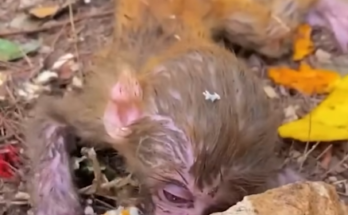
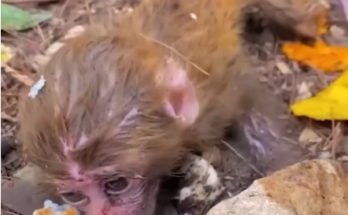
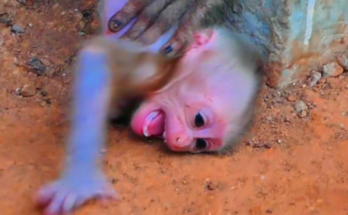
In the heart of the jungle, where survival is a daily battle, one mother monkey’s tragic story has captured the attention of animal lovers worldwide. A paralyzed mother monkey, unable to move on her own, cries out in distress, her desperate calls echoing through the trees. Her pain is evident, her eyes filled with sorrow as she pleads for help—not just for herself, but for the infant clinging to her weak body.
Motherhood in the wild is already a challenge, but for this injured primate, the struggle is unbearable. Without the ability to gather food or escape predators, she and her baby face insurmountable odds. Yet, in this moment of despair, something incredible happens—a group of fellow primates, known as “primate nannies,” come to her aid. These compassionate members of her troop instinctively take on the responsibility of caring for both mother and child. They groom her, bring her food, and even attempt to comfort her with gentle touches.
This heartbreaking scene highlights the deep emotional connections that primates share, mirroring human compassion in astonishing ways. It also raises urgent questions about the dangers these animals face—whether from natural threats or human interference. Was this mother injured by a predator, a fall, or possibly human activity such as deforestation or hunting?
As wildlife conservationists rush to locate and rescue her, her story serves as a powerful reminder of the need to protect these intelligent and sensitive creatures. The sight of a paralyzed mother monkey crying for help tugs at the heartstrings, urging us to recognize our responsibility in safeguarding their future. If primates can show such empathy, shouldn’t we do the same?