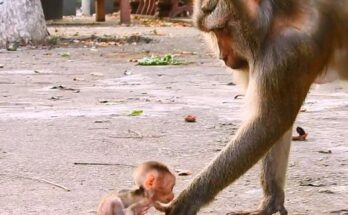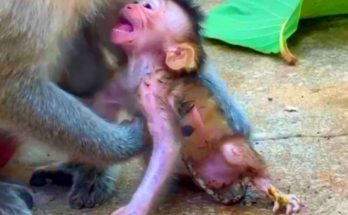
Deep in the lush canopy of a tropical forest, a heart-wrenching scene unfolded that reminded everyone just how fragile the line between curiosity and calamity can be. A young monkey, no older than a few months, found itself in a terrifying predicament—its tiny mouth wedged firmly in the tight crook of a tree branch, unable to free itself.
What started as an innocent moment of exploration quickly spiraled into a nightmare. The infant monkey, known for its playful energy and fearless curiosity, had been swinging through the trees with its troop. At some point, it must have investigated the fork of a branch, perhaps searching for food or trying to gnaw on the wood out of boredom or teething discomfort. In doing so, its jaw locked in an awkward position, slipping into a space that narrowed just enough to catch it, holding the animal in a cruel grip.
Witnesses—local researchers studying the troop—first noticed the monkey’s absence from the usual morning romp. After a brief search, they found it hanging helplessly by its mouth, legs twitching, eyes wide with panic. The sound of its desperate whimpers echoed softly through the forest, mingling with the calls of other monkeys who circled above in visible distress. The troop’s matriarch, a large, experienced female, remained nearby, chirping and pacing, clearly troubled by the youngster’s cries.
Time slowed as the scene unfolded. The monkey’s struggles only seemed to worsen its situation, causing small cuts to form around its lips. The branch, though not sharp, held firm like a natural trap, and the monkey—too young to understand what had happened—grew more exhausted with each passing minute.
It was a moment that underscored not only the vulnerability of young wildlife, but also the immense empathy that animals can show. Other members of the troop took turns trying to assist. One adolescent monkey tugged gently at the branch; another tried to groom the trapped youngster to keep it calm. But none of their efforts succeeded.
Fortunately, the researchers were equipped and trained for situations like this. Carefully, they used a soft cloth to gently hold the monkey still, and with a small handsaw and great precision, they carved just enough of the branch to release its grip. The entire process took under twenty minutes, though to those watching, it felt far longer.
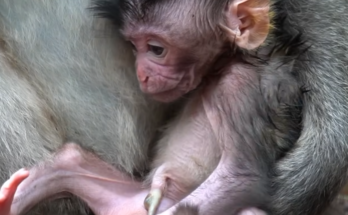
Once freed, the young monkey was cradled briefly to check for injuries. Though shaken and slightly bruised, it was otherwise unharmed. As soon as it was released, it scampered into the arms of the matriarch, clinging to her with trembling limbs.
The forest returned to its usual rhythm, but the image of those tears in the trees—literal and symbolic—lingered. It was a sobering reminder that even the wildest lives are not without peril, and that compassion, even among animals, remains one of nature’s most powerful forces.