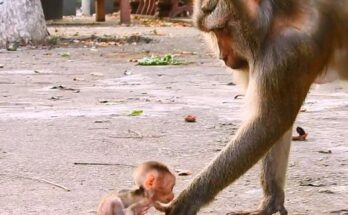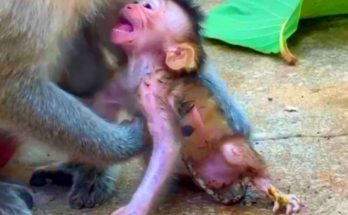
In a quiet jungle clearing, what began as playful curiosity quickly turned into a moment of sheer panic for one little monkey. Drawn by the glimmer of a shiny object nestled inside a narrow log, the young capuchin thrust his head into the opening—only to find himself suddenly trapped, his head lodged tightly between two stubborn roots. No amount of tugging, twisting, or thrashing could set him free.
Onlookers—his troop of equally curious companions—watched with wide eyes, some chattering anxiously, others unsure whether to flee or help. The little monkey’s limbs flailed as he kicked up dirt and leaves, his desperate struggles stirring the otherwise serene afternoon. His tiny body trembled with effort, his tail flicking wildly as he tried everything his instincts told him—jerking back, wriggling, even pausing for a moment to rest before launching another burst of effort.
The object of his fascination? A bright, discarded soda tab—shimmering like treasure in the dappled sunlight. The monkey had been mesmerized, reaching inside the hollow for what he likely thought was food or something fascinating to add to his growing stash of forest oddities. But nature had other plans. What seemed like an innocent peek turned into a trap, and now the forest echoed with the sounds of his frantic grunts.
The episode highlighted the unintended consequences of human waste in wildlife environments. While the scene may have appeared amusing at first glance, it raised a deeper concern about the interaction between wild animals and foreign objects left behind by humans. A simple piece of litter had ensnared a creature simply acting on curiosity—a trait we often admire in ourselves.
After several minutes of struggle that felt like hours, the troop’s elder—a large, grizzled male—approached. With calm precision and surprising tenderness, he began tugging gently at the young monkey’s shoulders, pausing each time the little one squealed in discomfort. Slowly, carefully, and with communal determination, the troop worked together, their combined efforts finally freeing the exhausted capuchin.
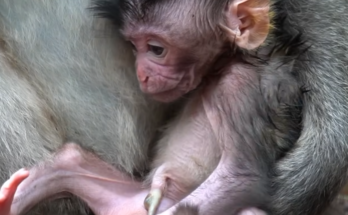
Freed at last, the little monkey stumbled back in a daze, then scampered to the safety of a nearby branch, clinging tightly to his mother. His wide eyes scanned the forest floor below—no longer with fascination, but with a newfound caution.
While the story ended in relief, it’s a poignant reminder that the natural curiosity of animals can put them in harm’s way, especially when their environment is compromised. A single piece of trash can pose a real threat to creatures who don’t understand its dangers. As humans, we hold the responsibility to keep their world clean—because even a playful moment can turn into a struggle for survival.