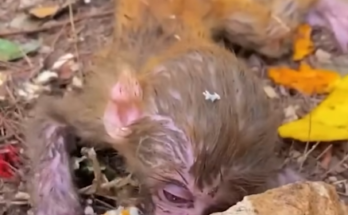
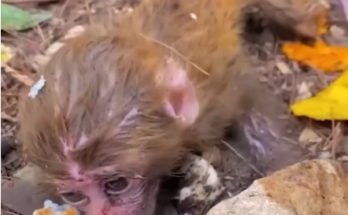
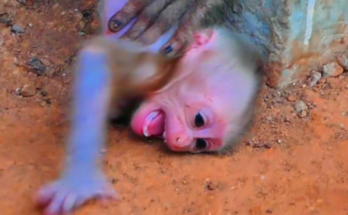
Baby monkeys in the wild often depend entirely on their mothers for food, comfort, and emotional support. This crucial bond ensures their survival during their vulnerable early years. However, when this bond is fractured, the consequences can be both heartbreaking and distressing. Baby monkey Jinx, a small and fragile primate, is one such example. His cries, loud and piercing, echo a narrative of neglect and mistreatment by his mother, Jade.
Jinx’s cries draw attention from other members of their troop, but Jade’s behavior remains indifferent and, at times, even aggressive. Jade, who may be under stress herself, perhaps due to environmental pressures or past trauma, appears to reject her maternal responsibilities. Instead of nurturing Jinx, she exhibits harsh behaviors—pushing him away when he seeks comfort or refusing to groom him, an essential bonding activity among primates.
This mistreatment profoundly impacts Jinx. His loud cries reflect his desperate need for attention, warmth, and sustenance. In a natural context, these cries would serve as a signal for his mother to respond, but Jade’s failure to do so exacerbates his distress. Over time, such neglect can lead to severe consequences for Jinx, including malnutrition, developmental delays, and social isolation.
The reasons behind Jade’s behavior may stem from several factors. Environmental stressors like scarce food resources or threats from predators could push her to prioritize her survival over nurturing her offspring. Alternatively, Jade may lack maternal instincts due to her own upbringing or genetic factors. In some cases, primate mothers who experienced neglect themselves are less likely to display proper caregiving behaviors toward their offspring.
Jinx’s plight raises broader ethical concerns about animal welfare in both wild and captive environments. Observing such behavior can be emotionally challenging for onlookers, especially when baby monkeys like Jinx evoke empathy due to their innocence and vulnerability. For conservationists and researchers, cases like Jinx and Jade’s highlight the importance of understanding primate social dynamics and the underlying causes of maternal neglect.
While it is tempting to intervene, experts often caution against human interference in natural settings unless the animal’s survival is directly threatened. For Jinx, the hope lies in his troop. Other members, such as older siblings or maternal figures, may step in to provide the care and affection Jade cannot. However, without proper nurturing, Jinx’s journey toward independence will be fraught with challenges, leaving his loud cries a haunting reminder of unmet needs.