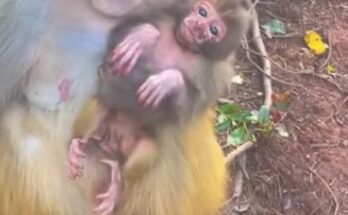
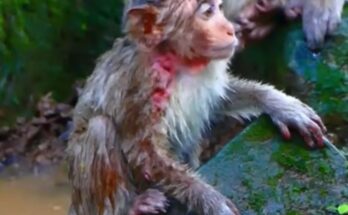
In the dense, verdant forests where monkeys usually leap effortlessly between branches, a tragic scene unfolded—one that painted a heartbreaking portrait of vulnerability. These poor little monkeys, once full of energy and mischief, were reduced to helpless, frail creatures struggling against sickness and extreme weakness. Their plight revealed not only the fragility of life in the wild but also the quiet resilience that can emerge even in the face of overwhelming adversity.
It began subtly. Caretakers and researchers observed signs that something was amiss. The monkeys, typically playful and curious, grew lethargic. Their once bright eyes dulled, their movements slowed, and their appetites waned. One by one, they began to show visible signs of illness: patchy fur, labored breathing, and trembling limbs. What followed was a rapid decline, as the sickness seemed to sweep through the group without mercy.
Many factors may have contributed to their deteriorating condition. It is well-known that monkeys are highly susceptible to environmental changes. A contaminated water source, the spread of a virus, or a scarcity of essential nutrients could have triggered the crisis. As their immune systems weakened, secondary infections and parasites likely took hold, compounding their suffering.
The monkeys’ frailty was painfully evident. Some clung weakly to branches, unable to support their own weight, while others curled up on the forest floor, too exhausted to move. Their once vibrant social structure—marked by grooming, vocalizations, and communal play—fell eerily silent. Even the alpha members appeared subdued, unable to shield their troop from the relentless onslaught of illness.
Despite their fragile state, there was a quiet endurance in how these monkeys coped. Mothers still attempted to comfort their ailing infants, gently cradling them even when they themselves were barely strong enough to hold on. Older monkeys, although weakened, occasionally reached out to groom their companions, a small but poignant reminder of the bonds that connected them.
Fortunately, intervention came in time for some. Conservationists and veterinarians, alerted by the deteriorating situation, stepped in to provide emergency aid. They administered fluids, treated infections, and provided nutrient-rich food to the most severely affected monkeys. Though not all could be saved, the dedication of these caregivers made a difference, offering a glimmer of hope amid the despair.
Their recovery was slow but visible. The monkeys who survived began regaining their strength, their movements becoming more assured, their eyes regaining their spark. Day by day, they reconnected with their troop, resuming the social behaviors that had once been lost to sickness. Though forever marked by the ordeal, they emerged as symbols of perseverance.
The story of these poor little monkeys serves as a sobering reminder of how delicate life in the wild can be. Yet, it also highlights the profound capacity for resilience—even in creatures rendered helpless and frail. Through compassion, intervention, and the natural will to survive, these monkeys endured, a testament to both the vulnerability and strength of all living beings.