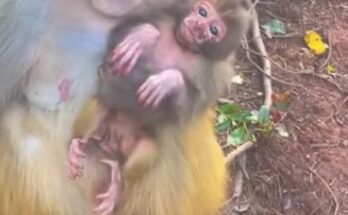
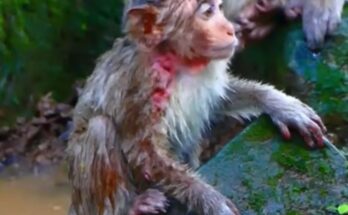
e nature is more than a gesture; it is a profound act of devotion and responsibility. She offers her baby safety not just from external dangers but from the uncertainties of growing up in the wild. Every gentle stroke, every reassuring cuddle, reinforces trust and teaches the young monkey the essential skills of connection, empathy, and resilience. These quiet, seemingly simple moments are the foundation upon which the baby monkey will learn to navigate its world, eventually passing on the same lessons when it becomes a parent.
This scene also reflects the broader harmony of the wilderness. In a world that can often seem unpredictable and harsh, there exist pockets of profound tenderness and balance. The natural world thrives on these relationships—interdependent, delicate, and quietly powerful. The sight of a mother cradling her baby reminds us that care and protection are intrinsic forces that shape not only individuals but entire ecosystems.
For human observers, such a moment resonates on a deeply emotional level. It bridges the gap between species, illuminating the shared experience of love, protection, and connection. It invites reflection on the importance of nurturing relationships, both within our families and within the broader natural world we inhabit. The simple, honest embrace of the mother and baby monkey becomes a mirror, showing us the enduring value of compassion and care.
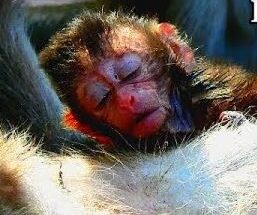
In the end, the image of the baby monkey resting peacefully in its mother’s arms is more than just a snapshot of wildlife—it is a gentle reminder of the bonds that tie all living beings together, the quiet strength of love, and the beauty of nature’s tender, enduring embrace.