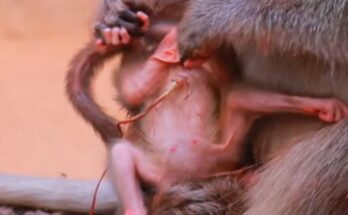
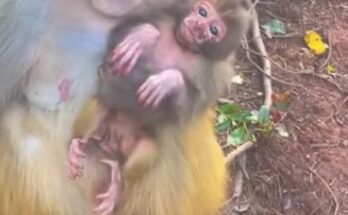
There are few things more heartbreaking than seeing a young creature yearning for the world beyond its prison. One such sight—etched into the minds of those who’ve witnessed it—is that of a small monkey, barely more than a baby, sitting helplessly in a cage. Behind the cold metal bars, its wide, expressive eyes tell a story of confusion, fear, and longing. Its tiny hands, so similar to our own, reach outward—not for food or amusement, but for affection, connection, and freedom.
The monkey’s gestures are painfully human. It clings to the cage’s bars as though they were the only barrier between itself and a better life. Its fingers stretch toward anyone who passes by, as if begging for rescue, for kindness, for someone to see the soul trapped inside the furred body. It doesn’t understand why it’s there. It doesn’t understand what it did to deserve captivity.
Animals, especially primates, are deeply emotional beings. They form bonds, feel loss, and seek companionship much like humans do. For a young monkey, being torn away from its mother or natural environment is not just a physical trauma—it’s a deep emotional wound. These intelligent, social animals need stimulation, affection, and the ability to play and explore. Without these, their spirits break. The sparkle in their eyes dims, replaced by a haunted look of despair.
Caged life for such animals is not life at all. It’s a sentence—one that often stems from the exotic pet trade, wildlife trafficking, or unregulated roadside zoos. Many people who buy or confine monkeys fail to understand the long-term needs of these animals. What starts as a novelty ends in neglect and suffering. The cages are small, the diet is inadequate, and the psychological toll is immense.
The monkey reaching through the bars is not just asking for rescue. It’s a symbol—a living reminder of the consequences of human actions and choices. It shows how far compassion must go to undo what cruelty has wrought. That outstretched hand is a call to all of us, asking for empathy, for action, and for change.
Organizations around the world work tirelessly to rescue animals from such tragic circumstances. Sanctuaries provide safe havens where former captives can heal and live with dignity. But the work is never done. For every monkey rescued, many more suffer in silence, out of view and out of mind.
If you ever come across an image or a real-life moment like this—pause. Let it move you. Let it stir something deep inside. Because the young monkey in the cage is not just one animal—it is the face of a larger issue, and perhaps, a chance for us to be better.
We owe it to them to do more than look away. We owe them love, protection, and above all, freedom.