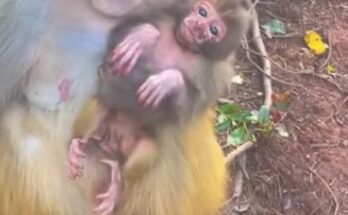
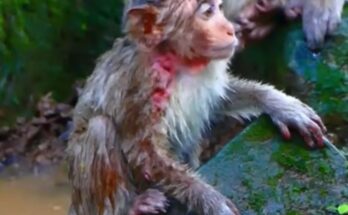
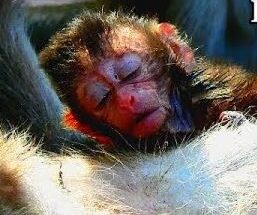
In the heart of the jungle, amidst the rustling leaves and the chatter of the troop, a small and tender scene unfolds—one that captures both the sweetness and the harsh realities of life in the wild. A tiny baby monkey, still clinging tightly to its mother’s fur, lets out soft cries, eyes wide and pleading, as it begs for one more sip of milk. Yet, to the surprise of any onlooker, the mother gently but firmly turns away, denying her little one’s request. This simple act of refusal is more than meets the eye—it is a profound example of tough love, an instinctive lesson necessary for survival.
From the moment of birth, a baby monkey shares an incredibly close bond with its mother. She provides constant warmth, protection, and most importantly, nourishment through her milk. For the baby, nursing is not just about feeding—it is a source of comfort, security, and connection. It is the center of its small world. However, nature has its seasons, and there comes a time when that comfort must give way to independence.
In this touching moment, the mother monkey is not being cold or uncaring. Quite the opposite—her refusal is an act of deep wisdom and foresight. She knows instinctively that her baby must learn to fend for itself, to find food, and to survive without her constant aid. If she continues to allow the baby to nurse indefinitely, it may grow physically weaker, overly dependent, and unprepared for the challenges of adulthood in the wild.
As the tiny monkey whimpers and tries to latch on, the mother gently pulls away, guiding her baby to look elsewhere for nourishment. She may offer a piece of fruit or encourage the baby to forage alongside her. At first, the little one struggles—its instinct is to return to the safety of nursing, to avoid the unfamiliar effort of finding its own food. But the mother remains consistent, using her quiet firmness to steer her baby toward self-sufficiency.
What makes this scene especially heart-touching is the visible emotional struggle. The baby’s confusion and sadness, mirrored by the mother’s quiet but unwavering resolve, reflect a universal parenting experience. It is a reminder that love sometimes means saying no—not out of cruelty, but out of care. It is about giving a child the tools and strength to survive in a world that will not always be gentle.
As days pass, the little monkey gradually begins to adapt. It mimics its mother, watching how she selects leaves, cracks open nuts, or digs for insects. Slowly, it learns to rely less on milk and more on its growing skills. The bond between mother and baby doesn’t weaken—it transforms. No longer centered solely around nursing, their connection evolves into one based on guidance, observation, and trust.
This moment of tough love in the wild is a beautiful, bittersweet glimpse into nature’s wisdom. It teaches us that real love is not always about immediate comfort—it’s often about preparing those we care for to stand on their own. And sometimes, the hardest lessons are the ones that make all the difference.