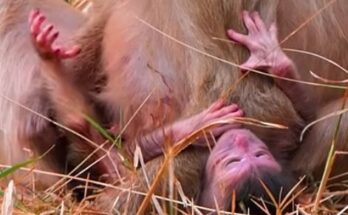
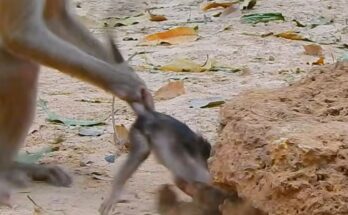
So painful to see the weak newborn monkey tremble helplessly from severe, continuous diarrhea and fatigue. The tiny creature, barely able to open its eyes, lies curled against the rough ground, its fragile body shaking uncontrollably. Each small movement seems to drain what little strength remains in its frail frame. The once bright sparkle of new life has faded into dull, tired eyes that silently plead for relief. Its soft whimpers echo through the forest, heartbreaking and full of suffering, as its mother hovers nearby in distress, unsure how to help her fragile baby.
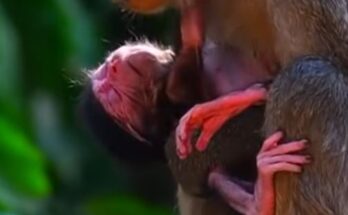
The mother monkey gently strokes her infant, wrapping her arms around him as though her warmth alone could ease his pain. She watches in sorrow as her baby refuses to nurse, too weak and dehydrated to even lift his head. Every attempt she makes to comfort him seems in vain—the tiny monkey’s body continues to quiver, his fur damp from exhaustion and illness. Nature can be harsh, and in moments like this, even a mother’s boundless love feels powerless.
Around them, life continues as usual—the trees sway, birds call, and other monkeys chatter in the distance—yet this mother’s world has shrunk to the small, trembling body she cradles. She cleans his face gently, hoping to bring comfort, but the baby only lets out a faint, broken cry. It is a devastating reminder of how fragile newborn life can be, especially in the wild where survival depends on strength and health.
As the day fades, the mother refuses to give up. She stays close, guarding her baby through the night, her eyes full of fear and love. The scene is deeply heartbreaking—a mother’s desperate hope against nature’s cruel test of endurance and loss.